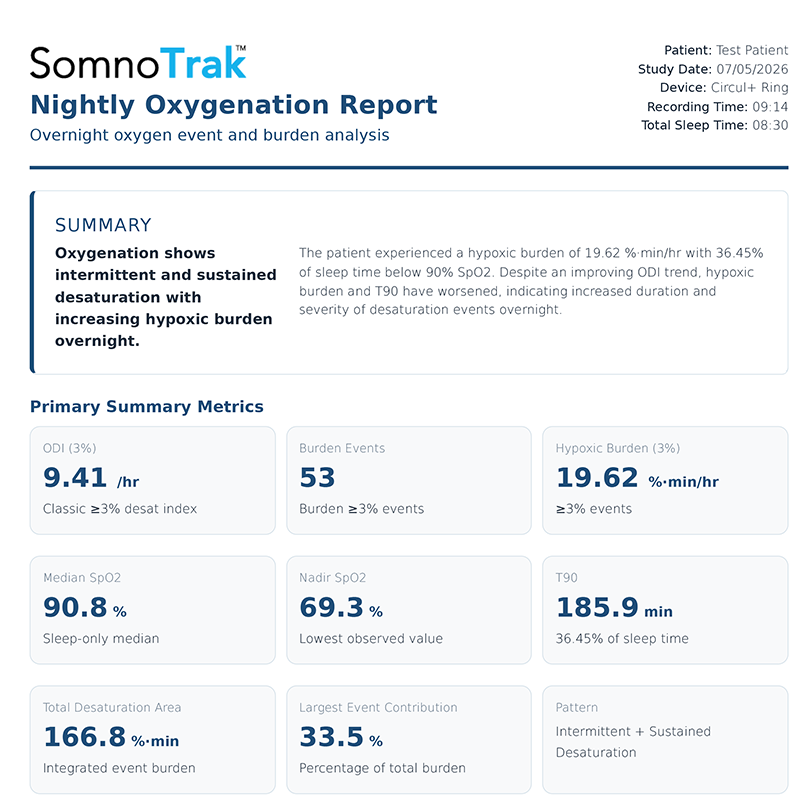
Nightly Oxygenation Report
Examines a single night in depth, including ODI, hypoxic burden, T90/T88, SpO₂ behavior, desaturation morphology and comparison with the prior study.
View sample report →
SomnoTrak gives physicians and sleep dentists objective nightly sleep and oxygenation data, then shows how those measures change across treatment and time.
A sleep study can characterize a night. SomnoTrak is designed to show what happens after that night: whether oxygenation, respiratory-event burden and sleep patterns improve, worsen or remain variable across weeks and months.
That makes the data useful for following therapy, identifying changes between visits and deciding when a closer clinical review may be warranted.
Sleep-related physiological signals are recorded throughout the night.
Oxygenation, desaturation events, hypoxic burden, sleep and cardiovascular measures are calculated.
Nightly data becomes a longitudinal record rather than a collection of isolated snapshots.
Reports summarize current status, treatment trends and recurring sleep or oxygenation patterns.
Review a single night in detail, follow changes from baseline across treatment, and identify recurring sleep and oxygenation patterns. Together, these reports put each night's findings in the context of your patient's history to support follow-up conversations and clinical review.
Examines a single night in depth, including ODI, hypoxic burden, T90/T88, SpO₂ behavior, desaturation morphology and comparison with the prior study.
View sample report →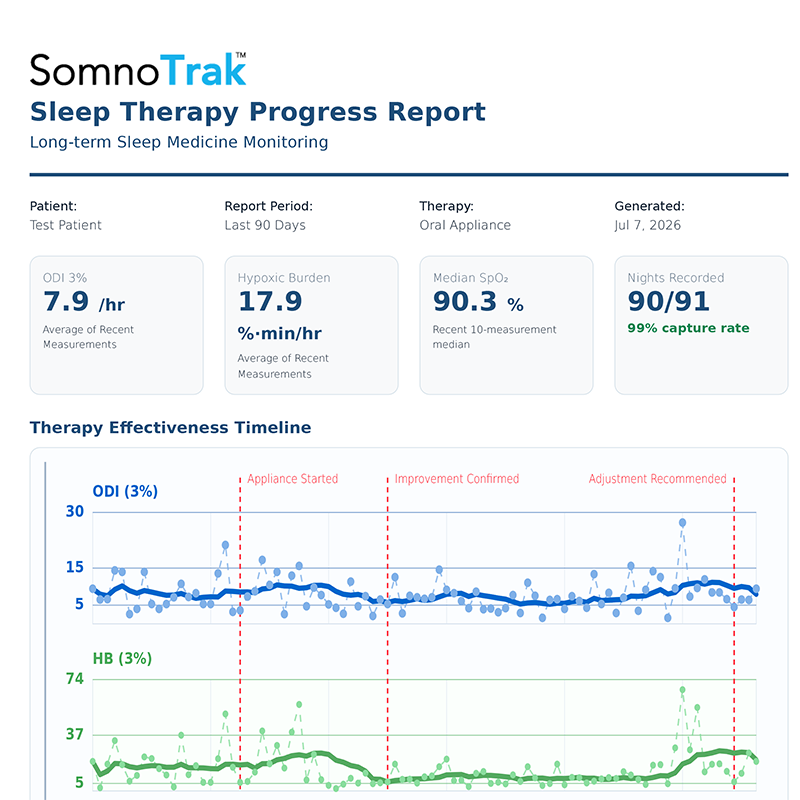
Shows recent versus baseline performance, rolling trends and provider-entered timeline markers across a treatment period.
View sample report →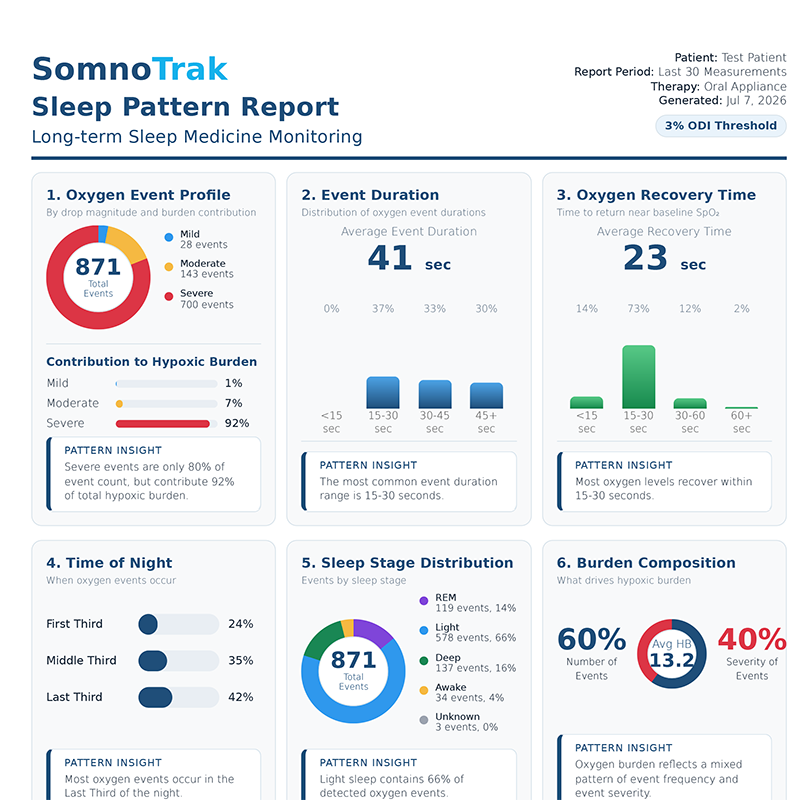
Summarizes event severity, duration, recovery, time-of-night distribution, sleep-stage distribution, burden composition and consistency across recent measurements.
View sample report →SomnoTrak presents multiple dimensions of overnight physiology so providers can see when different measures tell different parts of the story.
Follow oxygenation and respiratory-event burden after appliance initiation and subsequent adjustments.
Track how nightly physiology changes over time rather than relying only on isolated follow-up measurements.
Identify persistent, variable or emerging patterns that may not be apparent from a single night.
Reports organize longitudinal sleep and oxygenation information into a form that is easier to review over time. They are designed to complement your clinical judgment and conversations with patients, while diagnosis, professional interpretation and sleep studies, when clinically indicated, remain essential parts of care.
Continuous monitoring turns individual nights into a longitudinal record that can make follow-up conversations more informed.